
Cobb County Busted Mugshots
A mugshot is just an ID photo taken at jail intake. In Cobb County, that happens at the Adult Detention Center. The Sheriff's Office runs it as a complex. It holds A, B, and C facilities, plus an annex and a work deployment operation. This is county custody only. The state prison system plays no part. Paperwork is split, too. The arresting agency writes the incident report. The Sheriff's Office builds and keeps the county booking record.
That record opens with an admission. It may list a name, a Sheriff's Office Identification number, demographics, charges, bond details, and times in and out of custody, depending on the person. Charges change, though. They can be reduced, combined, amended, or dropped entirely. The booking entry marks a custody event and nothing more. For how a case actually ended, the court docket is the record that matters.
Don't expect photos from the Sheriff's inmate inquiry, though. A blank image there is deliberate policy under O.C.G.A. § 35-1-19, not a glitch. Photographs and incarceration files live with the Sheriff's Records and Identification Unit. A direct request is the official route to a picture. The Sheriff records page maps out which office handles arrest materials, fingerprints, photos, and court documents.
This image shows the records office setting. It does not display any individual Cobb booking photo.
Cobb County Busted Record Fields
Cobb's public tools split their duties. The roster answers who is in custody now. It accepts a name in last-name, first-name order, an SOID, or a serial number. The Admissions Review works from dates instead. One catch: its results can include people already released. So always pair the admission date with the current custody status.
The fields here are the practical core of a booking record. A deeper individual view may add more. But the portal guarantees no single field for every person or every closed case.
| Field | What it shows |
|---|---|
| Name and SOID | The person’s name and Sheriff’s Office Identification number. The SOID is the best search key when it is known. |
| Admission date and time | When the Adult Detention Center began the custody episode. This is not necessarily the time of the street arrest. |
| Completion or release time | When present, the end of the displayed episode. A blank field does not explain why custody continues. |
| Race, sex, and birth year | Descriptive fields returned by Admissions Review for record matching. They are not findings about a case. |
| Charge code and description | The charge basis recorded at booking, sometimes with a warrant or case reference. It can change in court. |
| Bond amount | A bond value when one is entered. Bond is a release condition, not a measure of guilt or final punishment. |
| Booking photograph | A photograph may be maintained by Records and Identification, but Cobb’s public portal does not publish it under the posted statute notice. |
Treat the record as a first step toward the right office. Admission rows cover county custody only. The incident report stays with whoever made the arrest. And the court docket holds whatever the case became.
Request Cobb County Booking Records
Records requests go through the Sheriff's open-records instructions and the GOVQA request portal. List the booking record and the photograph as separate items. Give the full name, an approximate booking date, the arresting agency, and any SOID or case number you have. Ask for electronic delivery when possible.
Georgia's Open Records Act guidance, under O.C.G.A. § 50-18-71, sets a three-business-day clock. That deadline covers the response, not the finished product. Within it the office must either produce records or explain the timeline, the cost, and anything withheld. Fees start friendly. The first fifteen minutes of searching are free. After that, the office may bill the lowest-paid qualified employee's hourly rate, up to ten cents a page for paper copies, or actual cost for other media.
- Identify the person and the county custody episode. Give the approximate admission date and SOID if the roster supplies one.
- Request the booking sheet or arrest/incarceration record, then name the booking photograph separately so the office can address each item.
- State that the request complies with O.C.G.A. § 35-1-19 and provide the required affirmation about publication and deletion-for-value.
- Ask for an estimate if search, redaction, copying, or retrieval charges apply. Do not treat a fee estimate as a bond payment.
- Keep the request, response, redactions, and any official disposition together if a correction or restriction question follows.
Cobb Sheriff Records
Cobb County Sheriff’s Office
Records and Identification
Records: (770) 499-4231
Open Records: (770) 499-4728
Public Safety Building
185 Roswell Street
Marietta, GA 30090
Adult Detention Center
Cobb County Adult Detention Center
1825 County Services Parkway
Marietta, GA 30008
Detention: (770) 499-4200
Administration: (770) 499-4221
Jail Administration keeps weekday hours: Monday through Friday, 8:00 a.m. to 5:00 p.m., per the Sheriff's listing.
For a look at this route, the open-records page walks requesters through the Sheriff's online process. It is a request interface, not a photo gallery.
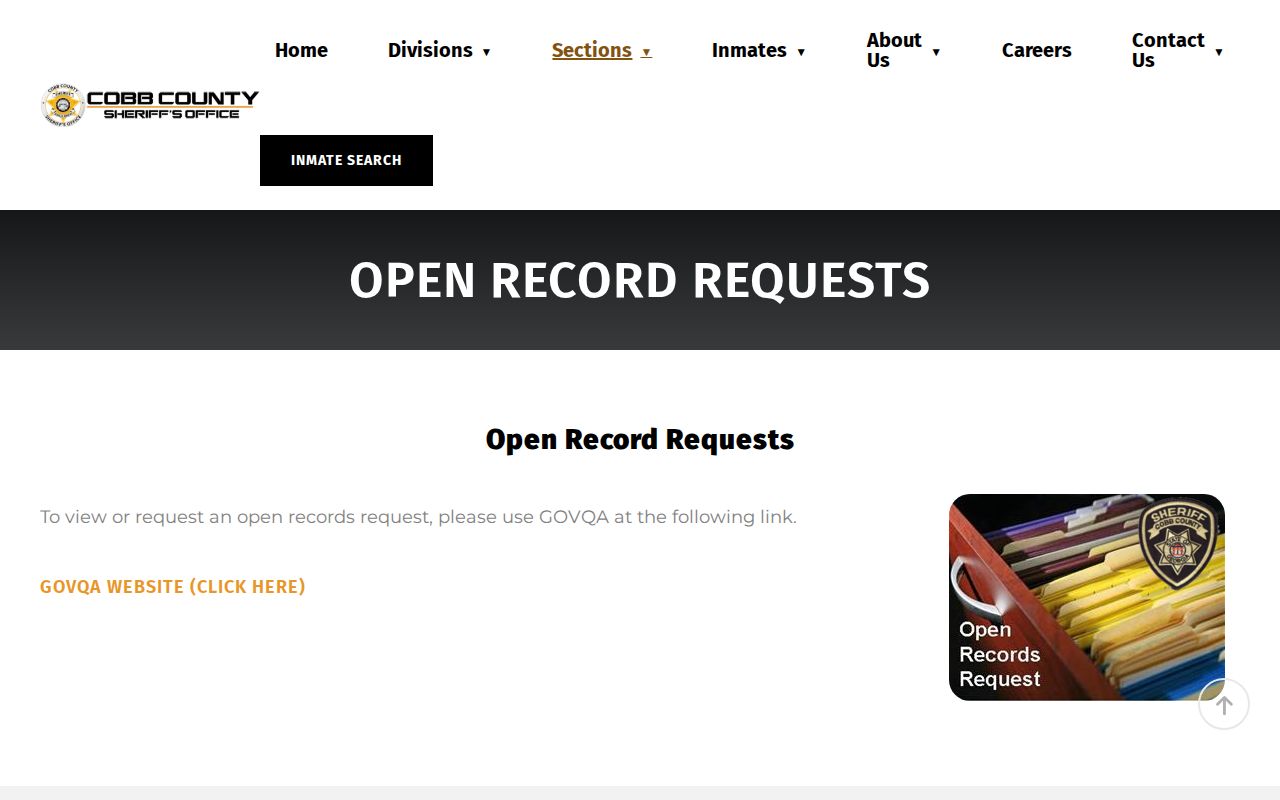
The screenshot underscores the gap between a live search result and the record an agency actually holds.
Georgia Busted Mugshot Law
Georgia's Open Records Act starts at O.C.G.A. § 50-18-70. It opens records to the public, with named exemptions. Mugshots get their own rule, O.C.G.A. § 35-1-19. That statute bars law-enforcement websites from publishing booking photos. It also blocks their release for publication when removal would demand a fee or other consideration. This is the very law the Sheriff cites in the roster notice explaining why photos no longer appear there.
Georgia has a free way off commercial mugshot sites. O.C.G.A. § 10-1-393.5(b.1) requires qualifying publishers to take down a booking photo within thirty days of a proper written request, at no charge. The Georgia Consumer Protection Division spells out the details. Your letter needs the person's name, date of birth, arrest date, arresting agency, and a qualifying case outcome, sent by the delivery method the statute names. Some editorial exceptions apply.
Skip any paid deletion service. Go through the agency's own correction route, use the free statutory process when the facts fit, and ask a search engine to drop outdated content once the source page changes. Keep in mind the Georgia rule does not erase a court record, a jail file, or every copy a publisher holds.
Record restriction is a separate track under O.C.G.A. § 35-3-37. The Georgia Bureau of Investigation restriction guidance covers which outcomes qualify and notes that you must contact the detention facility on its own for qualifying jail records. Sealing a court file takes its own petition. Juvenile photos sit apart from adult roster material under O.C.G.A. § 15-11-702, with limited inspection and special destruction rules.
No single button wipes a Cobb booking record. Save the court disposition, agency responses, and proof of delivery. Those papers beat any promise from an unofficial publisher.
Cobb County Retention and Archives
How long does a booking record survive? The Georgia Archives local-government schedule answers that in black and white. Jail booking records carry series number LG-19-060. They stay on file for ten years after release. Jail registers, LG-19-061, last ten years past the final entry. Incarceration lists get just one year. Inmate case files run ten years after release. Holding-cell video is kept a mere 180 days. A litigation hold, audit, or other legal requirement can stretch any of these windows.
| Record series | Published retention baseline |
|---|---|
| Jail booking records, LG-19-060 | Ten years after release |
| Jail registers, LG-19-061 | Ten years after the last entry |
| Incarceration lists, LG-19-050 | One year |
| Inmate case files, LG-19-054 | Ten years after release |
| Holding-cell video, LG-19-047 | 180 days |
Retention rules tell you what the county keeps, not what stays visible. A booking photo can be lawfully retained yet never posted anywhere, and some series eventually face destruction under the schedule. For an older Cobb record, ask Records and Identification which series holds it and whether a hold or destruction order applies. The Georgia Archives research gateway and its Virtual Vault cover designated historical collections. No single archive holds every old county mugshot, though. The Georgia Archives retention schedule sets the baseline record-series terms the county works from.
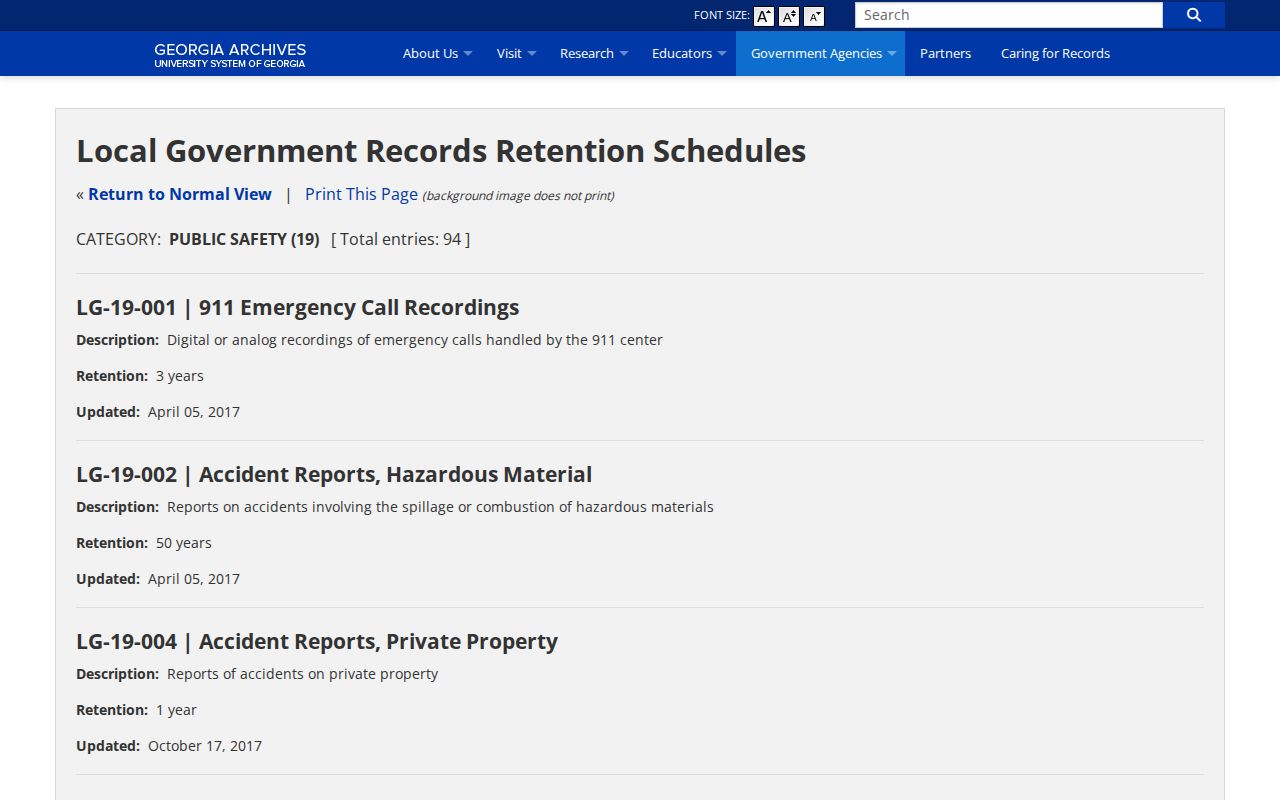
A retention schedule is a rulebook. It does not promise a given photograph is still online or on a shelf. Older records can sit in a designated historical collection instead. When the county route dead-ends, turn to the Georgia Archives research gateway. That is the natural next stop for such holdings.
Digging through historical archives works differently from scanning a current Cobb jail roster. Q: Does leaving the current roster mean the record vanished? No. "In Custody" answers one narrow question. It shows who is detained right now. A closed episode can still surface elsewhere. Try the Inquiry portal, an Admissions Review search, a records request, or the court docket itself.
Cobb County Jail History
Older records make more sense with a little history. The Sheriff's jail history fills in that backdrop. The County Services Parkway jail opened in 1989 with 864 beds. A late-1990s expansion pushed rated capacity to 2,048. The Adult Detention Center is now described as a 3,077-bed complex spanning units A, B, and C. Those numbers mark different eras. They are not a single fixed count.
That history matters when an old booking sheet names a building that no longer exists. The same sheet may belong to a different facility series. Build a records request around the date, SOID, and agency. Do not assume the current portal covers everything. The Sheriff remains the first source for county jail records. Municipal police and the courts keep their own files under separate schedules.
Find Cobb County Busted Mugshots
Which search fits depends on two things. One is custody status. The other is the date behind the question. "Recent" can mean admitted inside a chosen date range. It can mean still held at the Adult Detention Center. It can mean named in a news story, or transferred into Georgia corrections. None of those mean the same thing. Start with the official Cobb tools. Then follow the record to whichever agency or court owns the missing piece.
- For a recent admission, use Admissions Review with the same date for a calendar-day view or a begin and end range for several days.
- For current county custody, use the Sheriff’s inmate inquiry and choose “In Custody.” Search by SOID when possible, or enter last name followed by first name.
- For a released or older county episode, try “Inquiry” and Admissions Review. A missing current-custody result does not tell you how the case ended.
- For the photograph, ask the Sheriff’s Records and Identification Unit through GOVQA. Cobb’s public roster and feed contain no photos.
- For a state-sentenced person, use the Georgia Department of Corrections offender search. For court results, use the court that owns the case.
The Admissions Review interface is built around date ranges. Set a single day or stretch it across several. Cobb does not maintain separate "today" and "this week" pages, and the tool does not pretend otherwise.
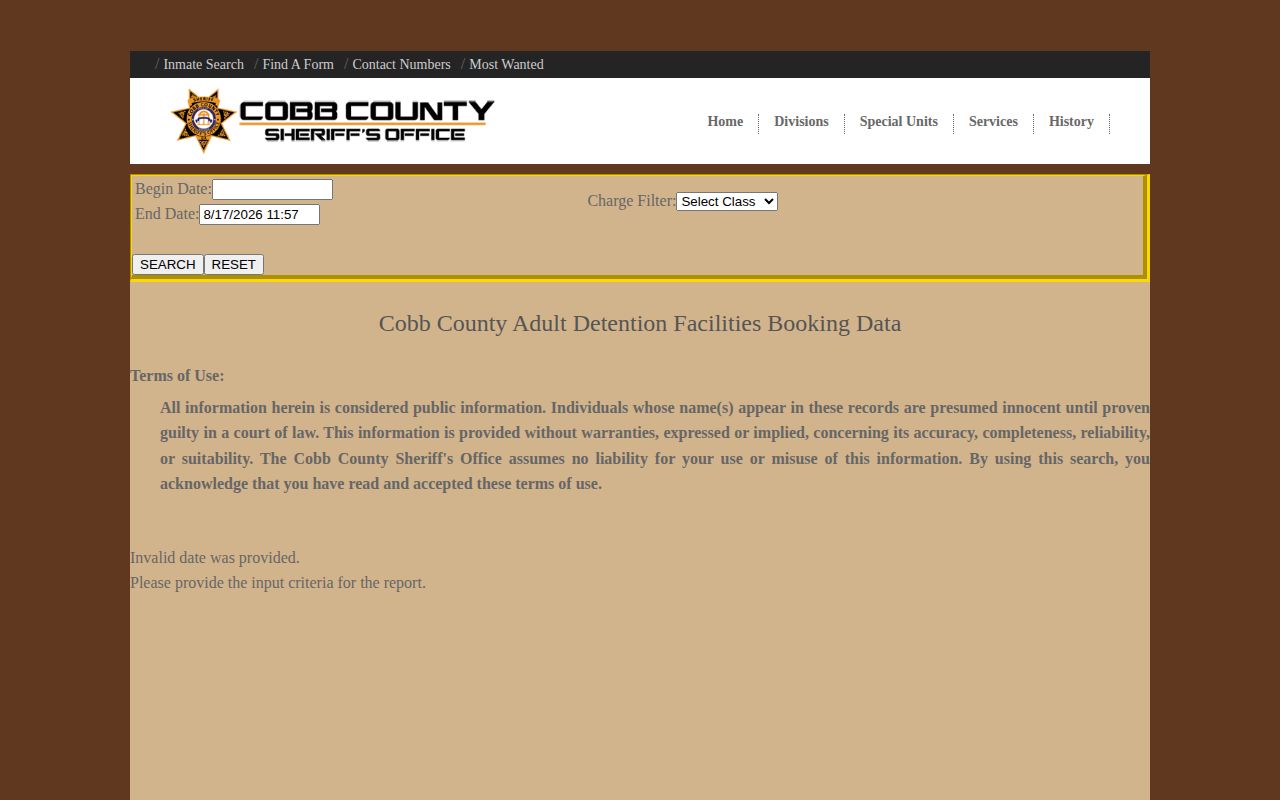
The interface is simply a search window. It shows how to frame a date range, nothing more.
Where Cobb County Busted Mugshots Appear
Official sources come first. Cobb's roster and admissions feed are the strongest places to confirm county custody and admission dates, but neither one displays a booking photo. For a photo, request it from the Sheriff. A court record is where case developments live. News outlets and third-party sites rank as secondary at best, and their pages can be incomplete or badly out of date.
| Channel | Photo? | Official? | Access and custody slice |
|---|---|---|---|
| Sheriff inmate inquiry | No | Yes | In Custody for current Adult Detention Center custody; Inquiry for a broader county query. |
| Admissions Review | No | Yes | People admitted during a chosen date range, including episodes that may already be complete. |
| Sheriff Records and Identification | By request | Yes | Booking records and photographs held by the Sheriff, subject to § 35-1-19 and exemptions. |
| GDC offender search | Sometimes | Yes | State-sentenced corrections records, not a recent county booking feed. |
| Cobb court searches | Usually no | Yes | Filed cases, dockets, and dispositions after the booking stage. |
| Georgia Gazette, Courier, MDJ, Patch | Story-specific | No | Selected news coverage. Publication date is not the same as admission date. |
| Mugshots.com Cobb archive | Yes, on its page | No | Working county page observed in research, but visible entries were stale, with newest page data from 2019. |
| Busted Newspaper, Recently Booked, Arrests.org, Mugshots.zone | Unconfirmed | No | No current verified Cobb page was established for these routes. Silence is not proof that no record exists. |
Trust the official row. When an aggregator page clashes with a Sheriff record or a court docket, the official source wins. A stale third-party card can linger online long after a release, correction, or dismissal. It proves nothing about present custody. Different questions need different pages. The selective Cobb County Most Wanted list answers one narrow need. The local Crime News & Mugshots page answers another. Each covers less ground than the full county feed.
Cobb County Busted Jail Roster
The Cobb Sheriff inmate inquiry offers three practical search keys. "In Custody" is the quicker question. It suits anyone checking the current jail population. "Inquiry" casts a wider net. The portal itself warns it will probably run slower. The system publishes no fixed refresh interval. Build in some lag. Calling it real time would overstate things.
| Search field | How to use it | What it answers |
|---|---|---|
| SOID | Enter the Sheriff’s Office Identification number. | Most efficient match when the number is known. |
| Name | Enter last name, a space, then first name. | Finds a person when no SOID is available; spelling matters. |
| Serial number | Use the serial number supplied by the record. | Alternative identifier for a known custody record. |
| In Custody or Inquiry | Select the status scope before submitting. | Current Adult Detention Center custody versus a broader inquiry. |
A search is only the first step. Pair it with a status check. Someone booked minutes ago may not show up yet, and a person who has been released can drop out of the current view while still sitting in Admissions Review or the retained booking file. Don't expect a thumbnail either. Cobb stopped publishing booking photos on its website under § 35-1-19, so the public result comes back without one.
- Open the Sheriff’s inmate inquiry and choose the narrowest matching search.
- Record the SOID, admission information, charges as entered, and any completion time without treating the charge as a final outcome.
- If no match appears, retry the name order and spelling, then use Admissions Review for the likely date.
- Request a missing booking sheet or photograph from Records and Identification rather than seeking a rehosted image.
The Sheriff's Office also runs mobile apps. The iOS version and the Android version carry agency news, alerts, tips, feedback, and an inmate-search doorway. Treat them as convenience channels, not hidden galleries. Nothing official says either app brings back the booking photos that the website removed. For the statutory notice and the actual search fields, the roster interface is the source that matters.
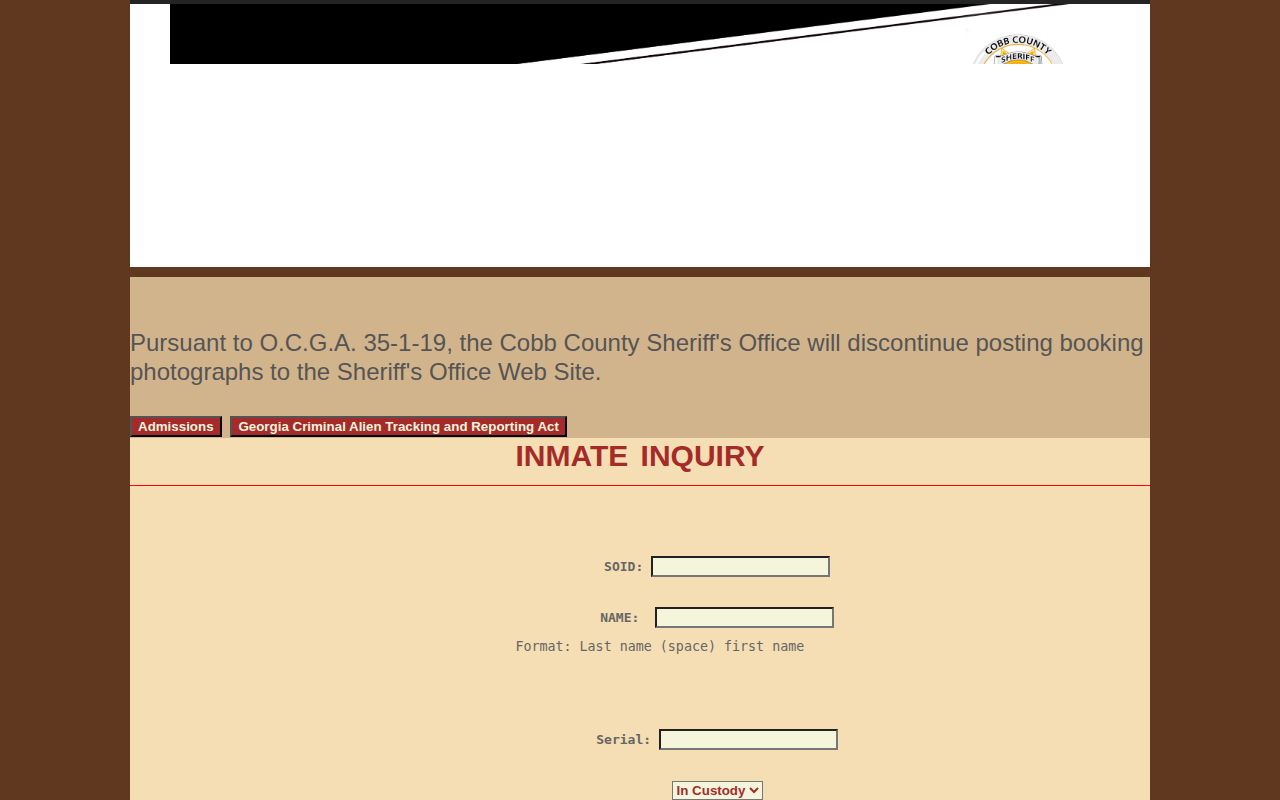
The screenshot makes the point plainly: if you want a booking photograph, you will need to make a request for it.
Busted Last Night in Cobb
Cobb's closest thing to an arrest log is the Admissions Review page. It's a date-range query. It is not a rolling "latest 24 hours" feed. Want same-day results? Set the Begin Date and End Date to one date. For a 48-hour, 72-hour, or weekly picture, enter the span you need, then check the timestamps at each edge. A calendar range won't match exact rolling hours. Read it accordingly.
Each row can carry the SOID, name, race, sex, birth year, admission start, completion or release time when present, charge code and description, warrant or case reference, and bond amount when supplied. Filter buttons narrow things by charge class. Options include alcohol, drug, DUI, municipal, ordinance, traffic, firearms, and weapons. The county publishes no fixed refresh schedule. There's no stated lookback limit either.
Two practical caveats apply here. First, volume shifts day to day, so don't guess at a typical daily count from any single date range; rely on the dates you select and the fields returned instead. Second, the feed carries no photos.
Timing can also trip you up. A news story may run well after the booking, or it may revisit an older case entirely. When a report says someone was arrested but the admissions date doesn't line up, check the arresting agency, any municipal holding step, and the court filing date before drawing conclusions.
Cobb County Bond Release Timing
Cobb's bonding information page breaks out the options: cash, property, out-of-county property, professional, driver's-license collateral, and pretrial. Each bond instrument also carries a nonrefundable $20 fee. That fee sits on top of the bond itself and any surcharge. The method chosen shapes how a person actually walks out. That's why a completion timestamp alone never tells the whole story.
| Record clue | Safe interpretation |
|---|---|
| Bond amount appears | A release condition or financial entry at booking, not a final sentence. |
| Completion time appears | The displayed custody episode ended; the row does not state why. |
| Person leaves In Custody | Current county custody changed. The case may still be open. |
| No completion time | The result does not show an end time; do not infer a reason. |
Tired of searching over and over for a release? Cobb points people to VINE. The Sheriff's notification page links directly to the Adult Detention Center registration path, so you can get an alert instead of refreshing the roster.
GDC Offender Photos
The Georgia Department of Corrections Find an Offender search covers a different population. It includes people sentenced into state custody or listed in the state offender history. It is not a recent Cobb arrest feed. It also skips many people booked pretrial. Someone awaiting transfer can sit in the county jail a while before the GDC record becomes useful.
The state search accepts a name, descriptive details, a GDC ID, or a case number. An exact search comes up empty sometimes. GDC then suggests typing the first four letters of the last name and choosing "ALL." Profiles can include a photo. GDC notes many have not been uploaded yet. A blank photo slot doesn't mean no identification image exists.
- Search the most reliable name spelling and try the first-four-letter method.
- Set the status to all, then compare GDC ID, conviction county, offense, sentence, release eligibility, and facility.
- Open the matching profile and check whether a state corrections photo is available.
- For a record not online, use GDC Legal Services or Inmate Records and Information at P.O. Box 1529, Forsyth, GA 31029, (478) 992-5240.
Keep the two systems straight. A GDC profile reflects a sentenced corrections record, not the original Cobb booking snapshot. So the state search answers later custody questions, while the Sheriff's inquiry answers county-jail ones. The GDC interface shows the state-level search path.
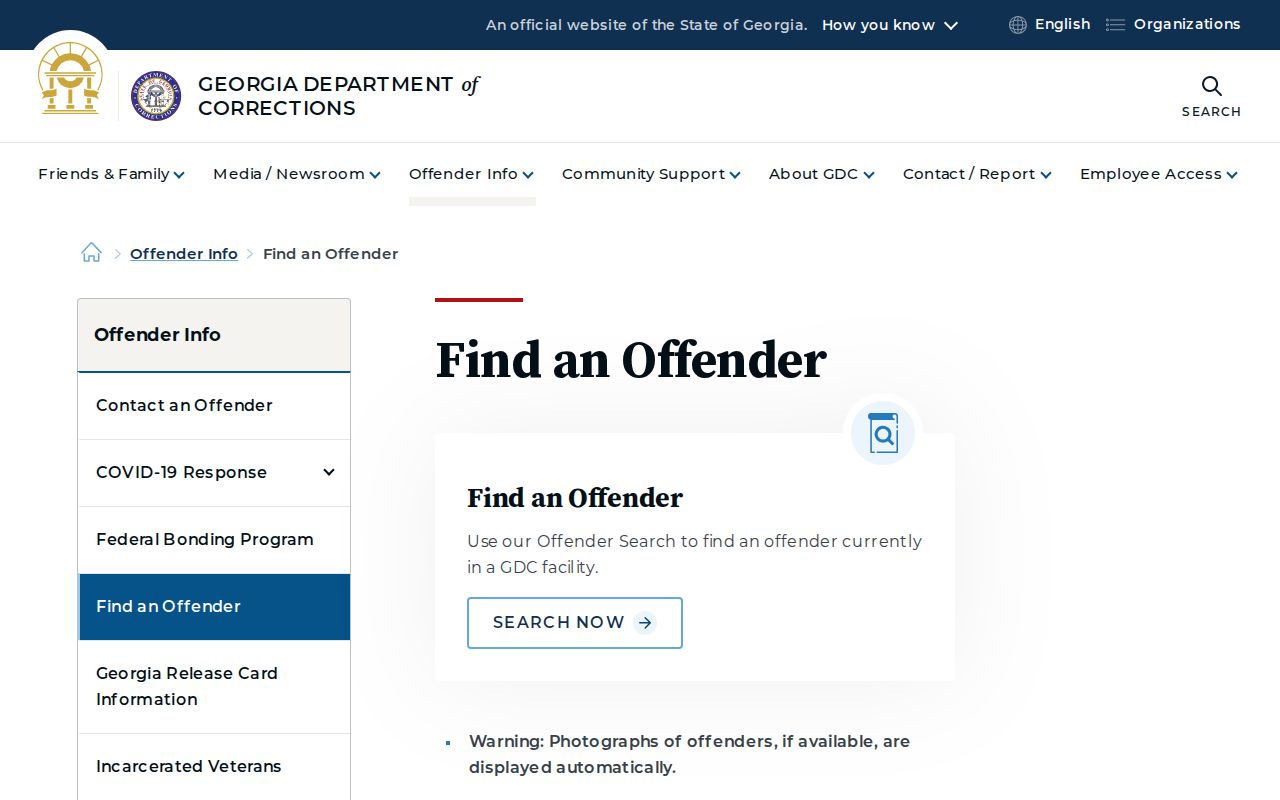
That state search belongs after county booking, not in place of it.
Booked or Released in Cobb?
One person can show up in several records at different times. That's normal. Read the custody label beside each result. A current roster row, a date-range admission, a court case, and a state corrections profile each describe a different point in the process.
| Custody state | Best source | What it can show |
|---|---|---|
| Just admitted | Admissions Review | Admission date, identifiers, charge rows, and a completion time if the episode has ended. No photo. |
| Currently in county custody | In Custody inquiry | Current Adult Detention Center status and matching booking information. No photo. |
| Released or older county episode | Inquiry, Admissions Review, GOVQA | Broader history and the retained record when the web result is incomplete. |
| Case filed in court | Magistrate, State, or Superior Court | Arraignment, docket events, disposition, sentence, and other case actions. |
| Sentenced to state prison | GDC Find an Offender | Corrections profile and a photo if available, not a county booking feed. |
| Federal or immigration custody | BOP or ICE locator | A separate federal or ICE custody record. BOP’s public locator has no booking photos. |
A disappearance from the roster means just one thing. The person is no longer in that county custody view. Nothing more. It says nothing about how the case ended. Keep that distinction in mind when a busted entry gets discussed after the custody episode closes.
After the Cobb County Booking
Magistrate Court handles first-appearance, probable-cause, and bond functions within its role. A misdemeanor may not appear in the Cobb State Court search until the Solicitor files an accusation. Once filed, State Court’s criminal search can show case status, arraignment or calendar events, charges, disposition date and result, and sentence. The court says current case-management changes appear online the next day, and the clerk’s official record controls.
Use Magistrate Court search for the pre-filing or warrant-related record when appropriate, State Court search for filed traffic and misdemeanor cases, and Superior Court search for felony and general criminal matters. The right docket depends on the charge and filing stage.
Q: Why is the court search blank? An arrest can precede the filing of a State Court accusation. Try Magistrate Court, check the arresting agency, and allow for the court’s filing and update cycle before assuming that no case exists.
For a court-record interface, the captured Cobb State Court search shows the fields used to move from a booking event toward disposition.
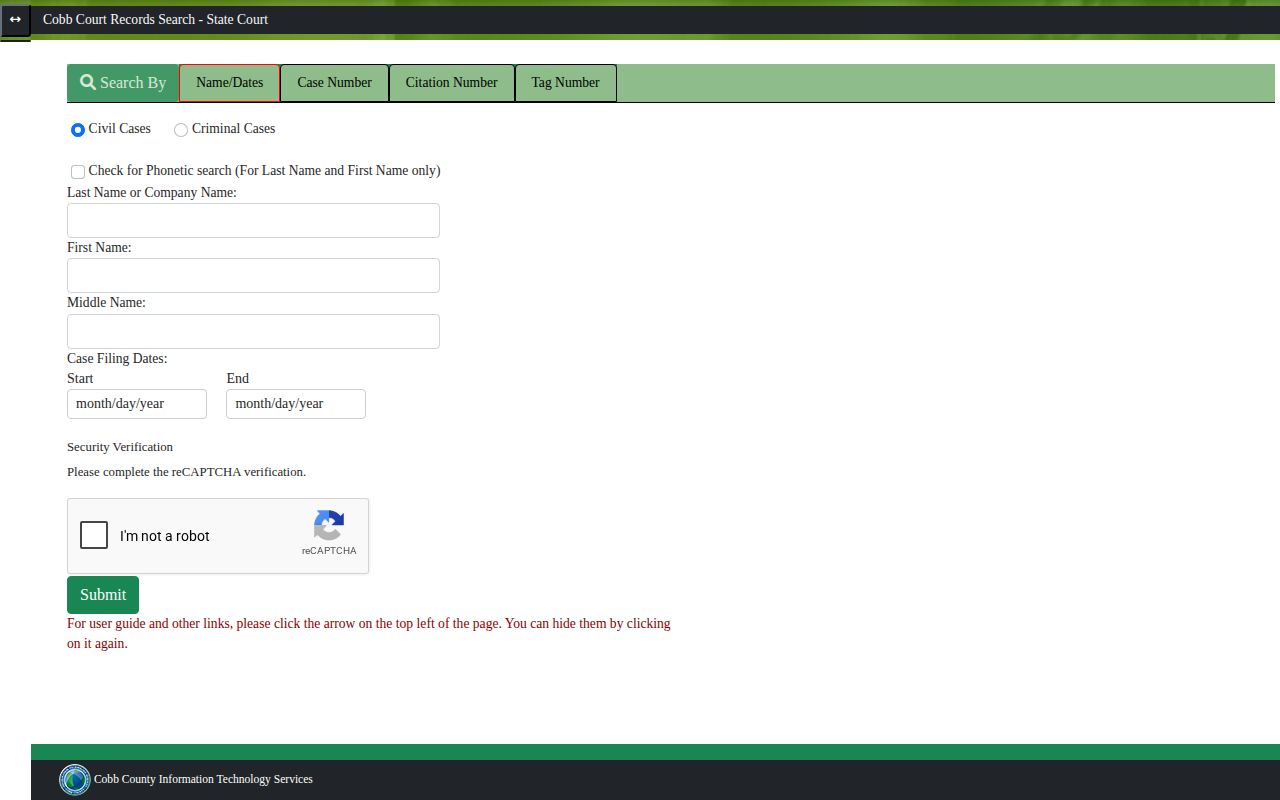
That screen is a search aid for court records, nothing more. For felony and general criminal matters, the Cobb Superior Court search is the companion route.
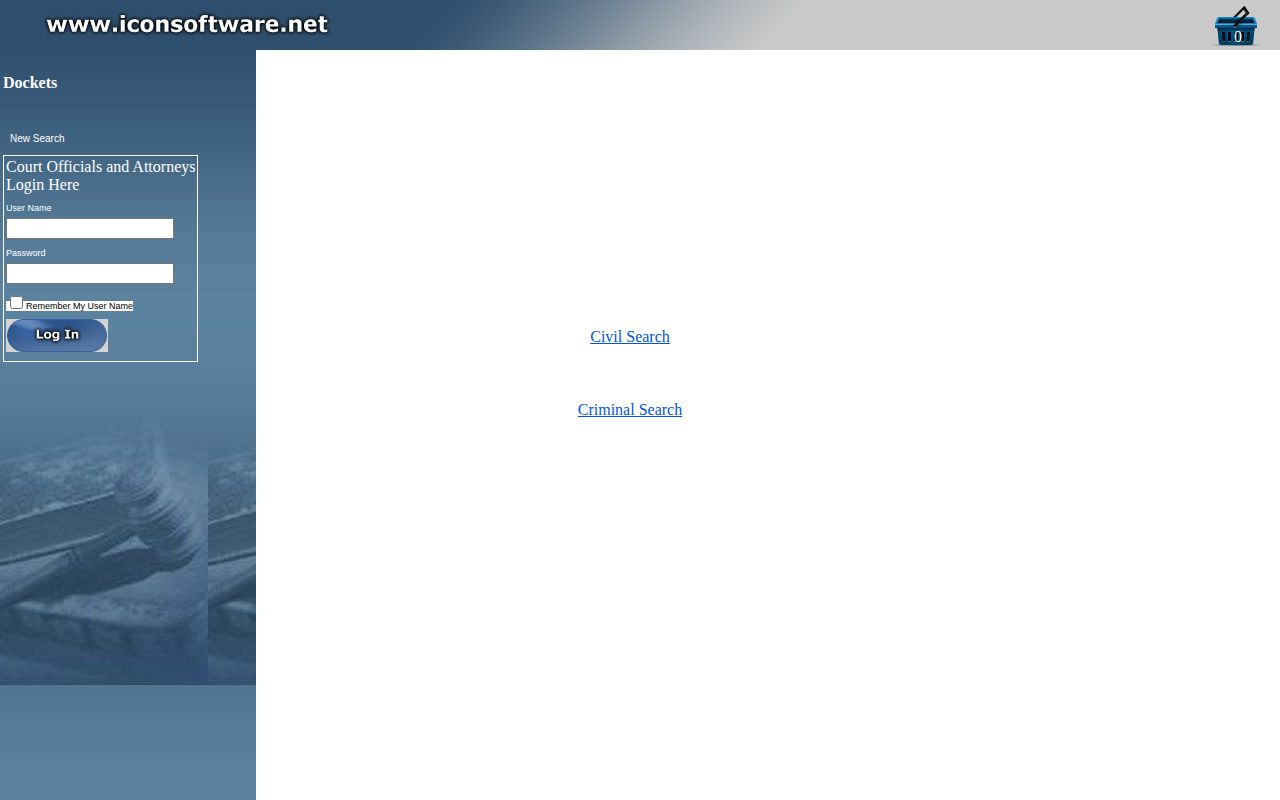
The second court interface helps separate felony filing records from the county booking event.
Cobb County Juvenile Records
Don't count on the adult roster if you're hunting for a juvenile booking photo. Georgia keeps fingerprints and photographs of minors in a separate system, and O.C.G.A. § 15-11-702 sharply limits who may inspect them. "Generally limited" is the honest phrasing, since certain serious juvenile proceedings can still be open to the public.
Requests can come back with holes, too. Victim information, medical details, sealed files, and other exempt material may be withheld or blacked out, and a records officer can cite the statute behind each redaction. If a field is missing, leave it blank. Guessing at it, or reading an empty adult search as proof of anything about a juvenile case, only muddies the water.
Cobb County VINE Alerts
Want a heads-up when someone in Cobb custody is released? The Sheriff's victim-notification page points to VINE. That's Georgia's statewide alert system, and it covers the Cobb Adult Detention Center. It works by web, phone, or app. Just know what it is: a custody-change alert. It's not a mugshot repository, not a court-disposition service, and no substitute for the current roster.
Register through the official VINE channel. Keep your contact details fresh with the Sheriff's office. An alert tells you the custody state changed. It won't tell you the legal outcome or whether a case was later dismissed.
The Sheriff's social accounts, linked from the latest-news page, sometimes carry urgent notices or occasional wanted information. There's no scheduled booking-photo feed there, though.
ICE Detainers in Cobb County
Cobb runs a separate interface under the Georgia Criminal Alien Tracking and Reporting Act. Quarterly HB 1105 reports come out too. The numbers are concrete. The third quarter of 2025 logged 4,810 bookings and 115 ICE detainers. The fourth quarter saw 4,451 bookings and 104 detainers. These are operational counts within set date ranges, nothing more.
A detainer is just a custody request. Cobb's CATRA date-range interface and the HB 1105 reports supply county detainer data, not any finding about a person. Custody can shift to federal hands as well. Each system has its own lookup. For someone in federal immigration custody, use the ICE detainee locator. Federal prison inmates appear in the Bureau of Prisons locator, which offers no booking-photo gallery. The U.S. Marshals Service has neither a general public detainee locator on par with BOP nor a general prisoner-photo search. The Bureau of Prisons locator lays out the federal custody route plainly, booking photos and all.
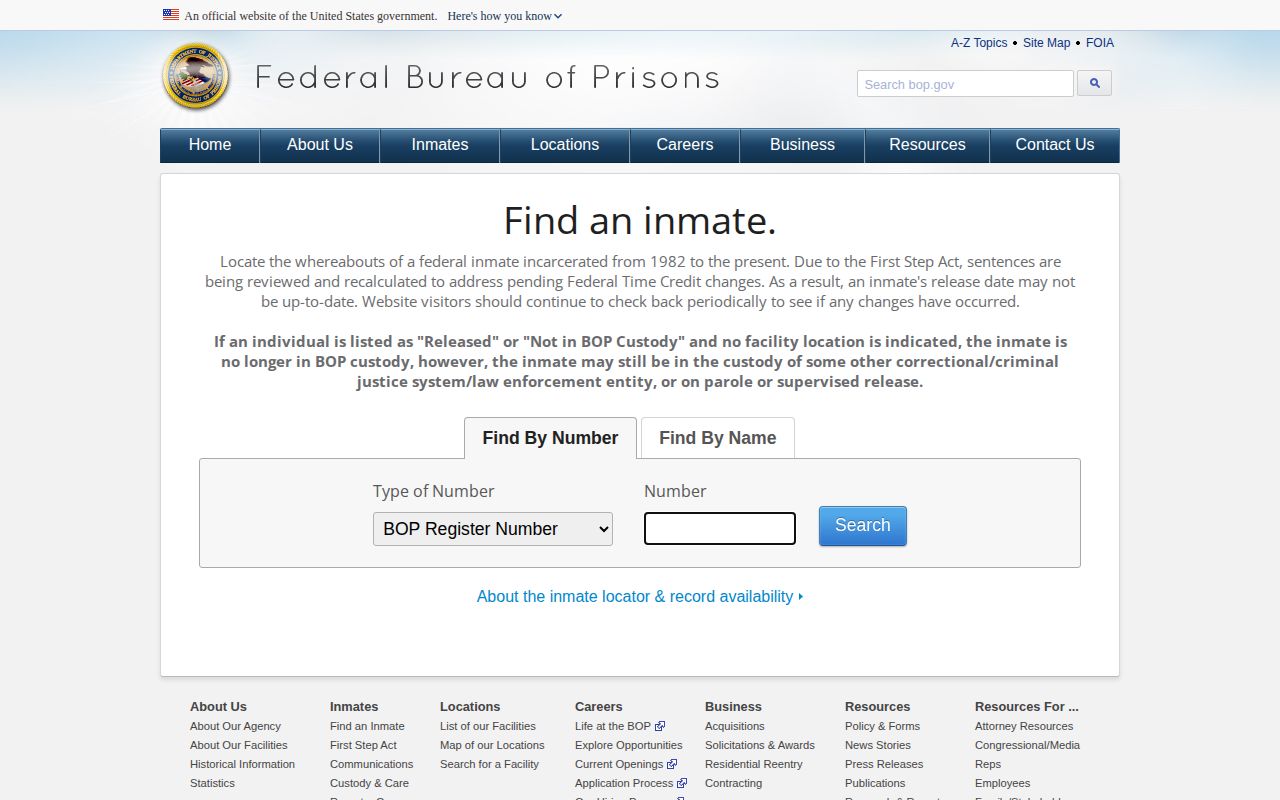
Federal custody runs on a wholly separate record system. Don't confuse it with the Cobb County Adult Detention Center.
Cobb County Busted Mugshots by City
Cobb's city pages draw a line between who made the arrest and where the person landed in county custody. Mableton is policed by Cobb County Police, since it has no municipal department of its own. Marietta has its own police force, and the county seat's municipal court can sit alongside State or Superior Court matters. Smyrna Police also runs the Smyrna Jail, so an SPD arrest doesn't automatically mean an admission to the Adult Detention Center.
- Mableton Busted Mugshots covers Cobb County Police records, the county booking fallback, and the post-2023 city boundary.
- Marietta Busted Mugshots covers MPD reports, the absence of a located public MPD booking feed, and county admissions.
- Smyrna Busted Mugshots covers the municipal jail boundary, SPD records, and county-transfer checks.
Across all three cities, the same rule holds. An arresting agency's report and a Sheriff booking row are related but distinct records. Start with the city page for local routing. The county tools remain the official fallback once a person is actually accepted at the Adult Detention Center.